
.jpeg)

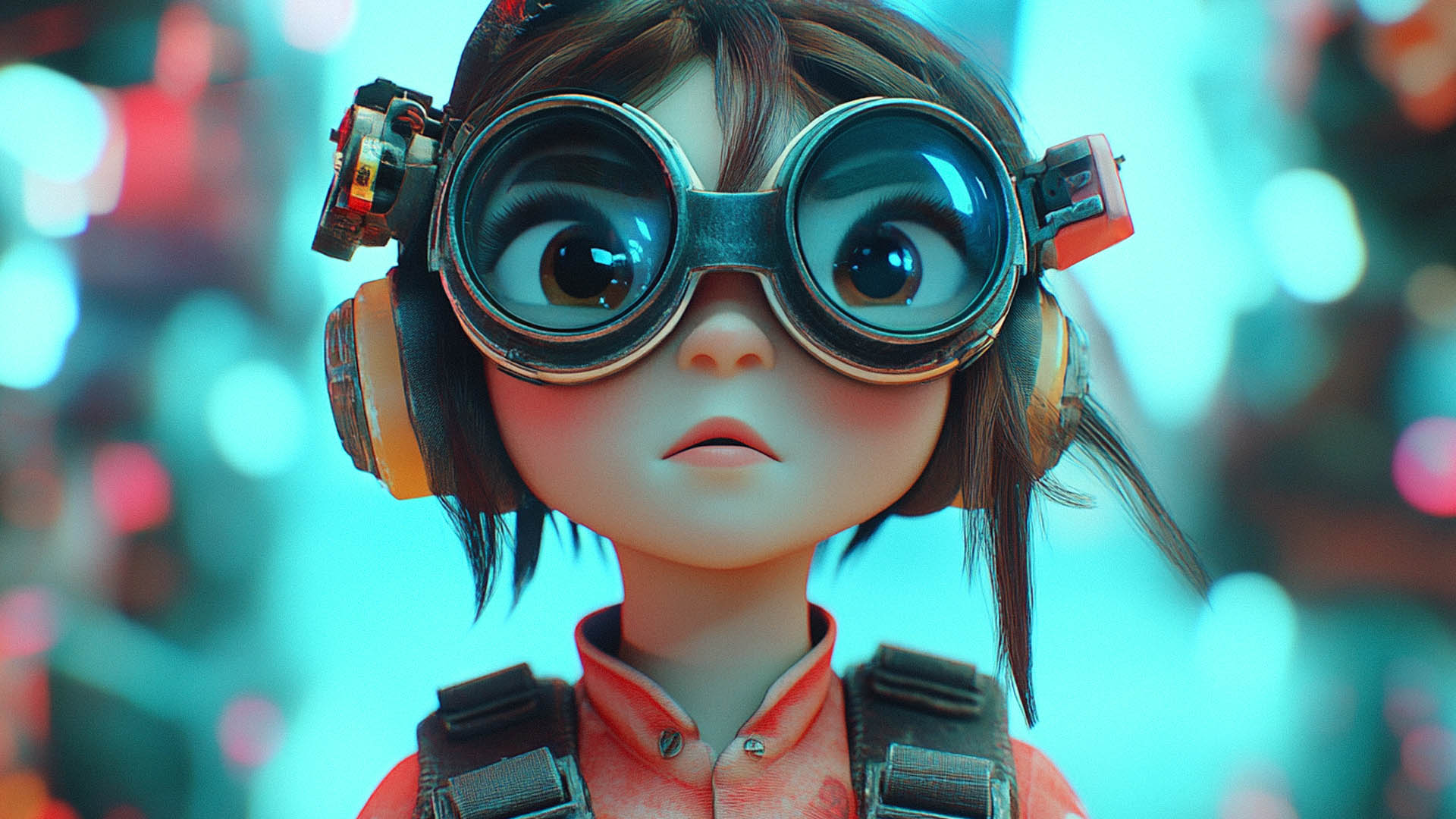
Animation is more than simply moving images—it is a multidisciplinary blend of art, technology, and storytelling that has engaged audiences for over a century. From early hand-drawn sequences to advanced CGI productions of today, the history of animation mirrors both, artistic and technological developments.
In this guide, we will examine the key techniques, genres, and styles of animation, along with the most influential names and studio titles that shaped the art of moving pictures—and discuss effective applications of Midjourney in animation processes.
Animation Genres, Techniques, and Styles
Let’s look at some of the most iconic and visually distinctive animation genres, techniques, and styles recognized by Midjourney. Starting with…
Classical Hand-drawn Animation
Emerging in the early 20th century, Classical hand-drawn animation was pioneered by artists like Winsor McCay and Émile Cohl, then industrialized by Walt Disney, Warner Bros., and Fleischer Studios during the Golden Age of Animation.

Feature-length milestones such as Snow White and the Seven Dwarfs (1937) established the full-length animated feature as a viable commercial format, together with now-classical stylized shorts like Looney Tunes set aesthetic and technical standards. And modern studios like Hayao Miyazaki’s Studio Ghibli and Nickelodeon maintain the tradition of expressive frame-by-frame artistry until this day.


In classic frame-by-frame drawing technique, foundational to the medium, each frame is meticulously drawn by hand, creating the illusion of movement through slight variations. Hand-drawing captures a distinctly expressive and organic feel—when every gesture, expression, and motion reveal the artist’s touch.


Emulating these aesthetics in Midjourney can be done by referencing specific eras, or invoking hand-drawn qualities through style modifiers and tokens like paper texture, hand-drawn lines, or simple vivid shapes.


Silhouette Animation
Silhouette animation took form in the 1920s through the work of German animator Lotte Reiniger, whose The Adventures of Prince Achmed (1926) is considered a landmark in early feature-length animation.

Silhouette animation employs backlit cut-out figures to create bold contrasts and delicate movements. This visual language leans on ornate profiles, intricate shapes, and stark light-dark interplay.


In Midjourney, this technique can be “requested” directly by simple prompts like silhouette animation scene, or “summoned” by high-contrast vector shadows, paper cut-out figures, and monochromatic background or duotone backdrop.


Stop-Motion Animation
In Stop-motion animation, physical models are incrementally posed and photographed frame-by-frame to create fluid, though discrete, movement.

Dating back to Władysław Starewicz’s The Cameraman’s Revenge (1912), stop-motion evolved from a novelty technique into a cinematic medium of its own. From the eerie surrealism of Jan Švankmajer to the insanely detailed magical worlds of Laika Studios, stop-motion animation’s charm lies in its tangible, tactile nature. Every movement is a real-world manipulation captured one little shift at a time, and its imperfection being a crucial part of the technique’s visual character.


Midjourney can recreate this analog feel with great precision by perfecting textures like felt, fabric, or plasticine, or miniature-feeling sets. Jus reference a physical material like handcrafted patchwork puppet, cardboard village set under studio lighting, or add a crafting techniques, like quilling.


Claymation
A subset of Stop-motion animation, Claymation rose to today’s prominence through the studios like Aardman Animations, known for their Wallace and Gromit series.

With clay, expressions and transformations can be exaggerated in fun, elastic ways. Midjourney can produce these clay-like visuals, even adding subtle surface textures—highlighting fingerprints, smudges, or soft indentations—to authentically render a hand-model feel.


Use modifiers like soft clay surface, finger-modeled details’, or animated plasticine set under directional lighting to capture the Claymation’s unique charm!


Cutout Animation
Rooted in 20th-century puppetry, Cutout animation involves flat characters and elements—often made of flat layers of paper, fabric, or other such material—moved incrementally to simulate motion.

Today, this genre—popular for its graphic simplicity—is most widely known through the series like South Park, which to full extent utilizes the paper-cut aesthetic with limited motion and sharp visual humor.


Traditional Cutout animation techniques can also be beautifully emulated in Midjourney through prompts like paper cut collage, or cardboard cutout animation.


Rotoscoping
Rotoscoping is an animation technique where animators trace over live-action footage, frame by frame, resulting in hyper-realistic movement and distinct visual style.

Invented by Max Fleischer in 1915 and originally used to enhance motion realism by tracing live-action footage, Rotoscoping later evolved into an expressive animation style, especially in films like Waking Life (2001) and A Scanner Darkly (2006), where realism blends with surreal motion and abstract visuals.


Rotoscoping is often characterized by flat textures, striking contrast, and bold outlines giving that technique a graphic novel-like appearance.


Anime
Originating from Japan’s 1970s, Anime is now one of the most influential cultural phenomenae of the epoch. The genre encompasses a vast stylistic universe of infinite subgenres and branches—many well-known to Midjourney.

You can reference iconic anime series and prominent a and include specific subgenres—use Kawaii for cute, pastel-toned character art; J-Horror for eerie, atmospheric visuals; Shonen for action-packed, high-energy scenes; or Mecha for epic robotic designs.


And, naturally, add the --niji 6 parameter to call Midjourney's “anime model”.


If you want to learn more about various Anime styles in Midjourney's --niji, check out our in-depth guide:

3D (CGI) Animation
3D animation became mainstream with Pixar’s Toy Story (1995), the first entirely CGI feature film. Pixar’s innovations were followed, among many others, by DreamWorks with Shrek, Blue Sky with Ice Age, and Illumination (Despicable Me). Today, CGI is a fully established dominant form of commercial animation.

Midjourney can effectively channel this dimension-rich style with a simple 3D animation added to your prompt.


However, to push it further, reference specific types of 3D—like low-poly 3D model, voxel animation, or a more detailed hyper-realistic 3D-rendered animation with raytracing lighting—to anchor the generation in the desired sub-style.


As CGI/3D technologies become more accessible with every passing day, in recent decades they’ve empowered a whole new generation of small studios, independent creators, and self-taught artists—leading to an explosion of diverse, inventive, original animated projects.


We at Midlibrary see AI tools like Midjourney as a natural extension of this movement—an incredible addition to the magical toolbox of independent animators and visual storytellers.
Blending Styles

Imagine your favorite animated film recreated in a completely different style—or a beloved character transported to an entirely new universe! Let’s evoke one of Midjourney’s superpowers and try to mix animation-focused prompts with unexpected artistic styles to achieve surprising and interesting results.


Artistic Styles
With Midjourney, we can reference a classical painting, contemporary design style, or niche subcultures to reimagine animated characters, scenes, and motion aesthetics in new ways.

Try fusing your animated concept with modifiers like in the style of Gustav Klimt, Byzantine mosaic or Brutalist graphic novel style. These mashups can transform even the most “basic” scenes into something striking and unexpected.


Midjourney’s stylistic elasticity opens up countless storytelling directions, fresh mood variations, and unique visual tones—an infinite remix space!


SREF Codes for Animation

And let’s not forget Midjourney’s SREF codes—an opportunity to explore entirely new visual directions, effortlessly change the visual style and mood, or even reinterpret established references such as film titles, renowned animators, genres, or classical techniques.


Almost any SREF can be applied to an animation prompt and transfer its stylistic features into the result.


Almost any SREF can beHowever, some SREFs seem much more animation-focused—they carry visual features at their core and are capable of adding animated look and feel to prompts that aren’t inherently animation-related.


Have fun experimenting!


To explore some of the best SREF codes for Animation—check out our latest compliation:

Conclusion
Today, the central question is no longer how animation is created, but rather what stories we choose to tell.

The medium has evolved dramatically—from early hand-drawn frames to complex digital compositions—and continues to push forward, driven by the creativity of animators and the rise of new technologies… like, well, AI!
Happy midjourneys!

Support Midlibrary
If you want to help us maintain and expand Midlibrary, produce more regular educational content of higher quality, and keep it free for everyone, please condsider joining our Patreon community.
Unless noted otherwise, all images on this website are created by the Midlibrary team using Midjourney AI and are not representative of real artists' works or real-world prototypes of the Midjourney styles used. Please respect the copyright—kindly ask us before re-using any materials published on Midlibrary.io.
♡
