- 01What's Nano Banana?
- 023D Character Sheet
- 03Iterative Design Pipelines
- 04Artistic Style Comparisons: Depth and Expression
- 05Understanding Abstract Concepts
- 06Characters
- 07Image Editing
- 08Colorizing
- 09Testing Style Transformations
- 10Combining Visual Elements
- 11Bonus Track: Precision Localization
- 12Aspect Ratio Trick
- 13Midjourney Vs. Nano Banana: Conclusion

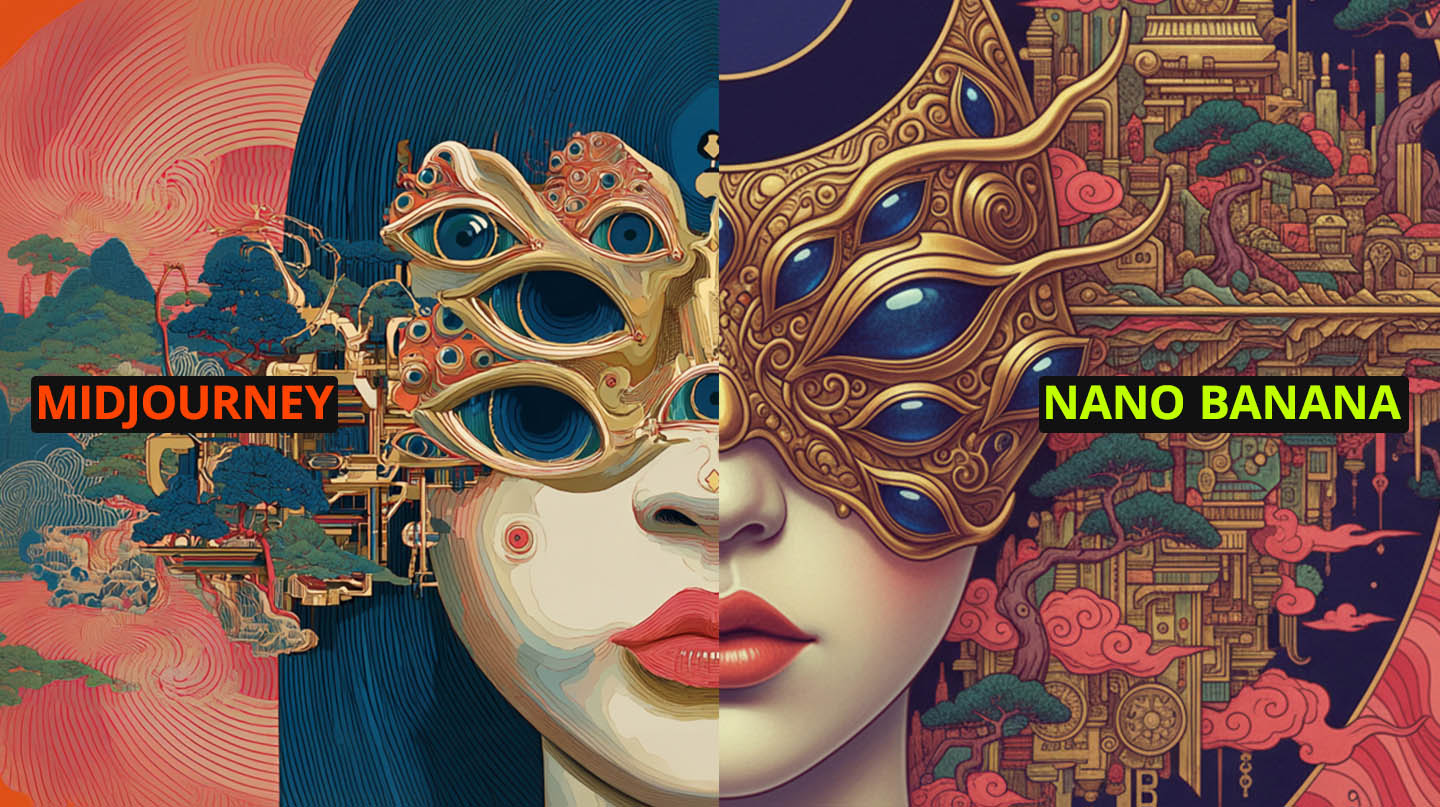
What happens when two of the most talked-about image AIs meet—one a master of creativity and atmosphere, the other a specialist in editing and transformation? In this guide, we’ll explore how Nano Banana (Google’s Gemini 2.5 Flash Image) and Midjourney overlap, differ, and ultimately complement each other, revealing a creative pipeline that’s stronger than either tool on its own.
Last month, Google has officially released Gemini 2.5 Flash Image—better known by its viral codename "Nano Banana"—an advanced AI model for image generation and editing.
Today, we'll explore how Nano Banana stacks up against our beloved Midjourney, in areas where their capabilities overlap, and more importantly, how these two powerful tools can synergize to unlock unprecedented creative potential.
What's Nano Banana?
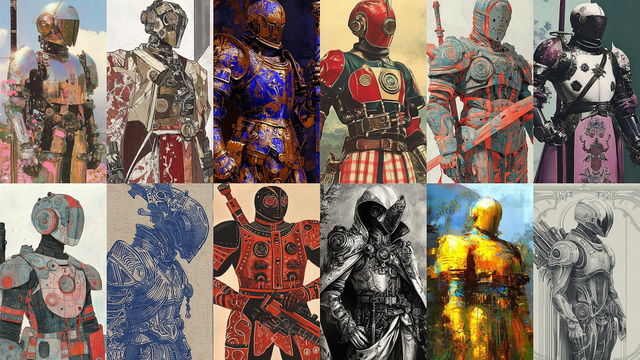
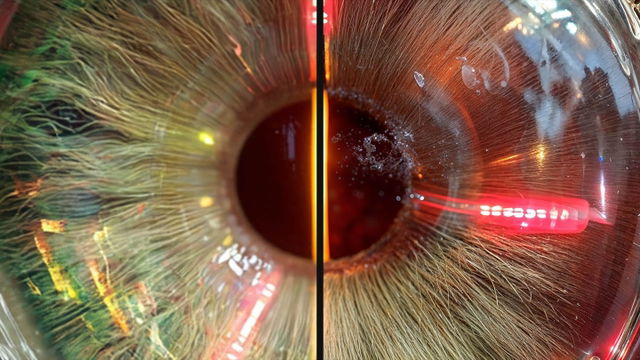
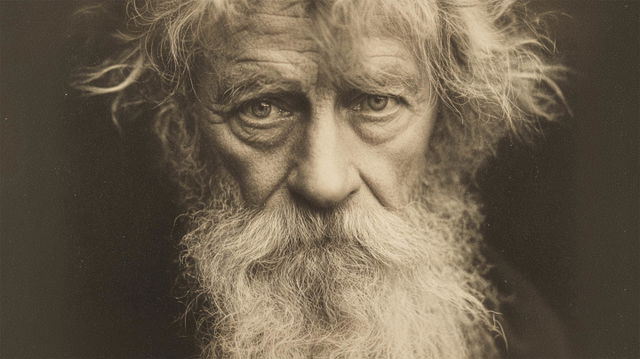
Nano Banana excels in editing, multi-view generation, re-contextualization, and style-transfer for recognizable/popular references.
Let's dive into the new model's core strengths, focusing on its abilities in editing, transforming, and manipulating imagery—features that set it apart and complement Midjourney's creative output.
3D Character Sheet
Nano Banana truly shines when it comes to extending our original Midjourney-created vision beyond a single image. Imagine starting with a Midjourney-generated concept image—for instance, a front view of a character or an artistic architectural photo.
Nano Banana can then extrapolate these into front, back, and side views for character sheets.
Multi-Views to 3D Models
Character sheets can be generated as separate images if you ask for it explicitly in your prompt. This means that the outputs can be then imported into 3D tools supporting multi-view inputs—like Tripo AI—to build comprehensive and detailed models.
Coming back to our architectural photography example: in this case, Nano Banana can generate blueprints and 3D renders for the designs from the picture.
As you can see, Nano Banana successfully takes a single concept and expands it into multiple views, making it super useful for character design, 3D modeling, and countless more genres and workflows.
Iterative Design Pipelines
Pushing its transformative capabilities further, Nano Banana can take us through an entire iterative design pipeline—from a ”napkin sketch” to a blueprint, to 3D model, and, finally, into a cinematic render.
This experiments shows how powerful this tool can be in visual development: from conceptualization to presentation.
Artistic Style Comparisons: Depth and Expression
While Nano Banana certainly shines in image manipulation, Midjourney remains the undisputed champion of pure artistic creation with unmatched imagination and a gift for richly detailed, atmospheric visuals.
However, there are certain styles—especially the widely popular and instantly recognizable ones—where Nano Banana demonstrates great results that can rival Midjourney’s (and sometimes even surpass them!).
However, these moments are fairly rare—overall, Midjourney continues to deliver imagery that feels more inventive, diverse, and interesting to look at. Here is a comparison based on Midlibrary’s signature benchmark prompts, designed to put to test each new Midjourney model.
Even with simpler prompts — the kind that leave more room for the AI’s imagination — Midjourney’s results usually come out more creative and nuanced, while Nano Banana often falls back on flatter, more generic visuals.
But that doesn’t mean you can’t get great results from Nano Banana’s artistic image generation. In fact, there’s one more side to this new model that makes it surprisingly versatile compared to Midjourney—its broader knowledge of artists and artistic styles that Midjourney’s catalog sometimes misses.
For instance, one of my favorite photographers is Sergei Prokudin-Gorskii—a pioneering photographer best known for his early 20th-century color images that beautifully documented the landscapes, architecture, and people of the Russian Empire.
If you add to a Midjourney prompt, the result won’t show anything recognizable—just generic imagery with no connection to the real-life photographer’s work. In short, Midjourney simply doesn’t know Prokudin-Gorskii.
Enter Nano Banana and its wider knowledge of names and styles. It steps in exactly where Midjourney leaves a gap.
Not only did Nano Banana recognize the name, it also managed to recreate Prokudin-Gorskii’s visual style almost perfectly (with just a little extra nudge on the text-prompt side).
Understanding Abstract Concepts
When we turn to abstract prompts like or (or even invented, meaningless terms), Midjourney rocks! It delivers varied, metaphorical, and evocative imagery.
Nano Banana, by contrast, leans toward more literal, simpler, and less imaginative interpretations...
Characters
One of the most difficult part in Midjourney workflows is consistent character creation.
Nano Banana, on the other hand, excels at developing characters that while retaining their unique essence across various artistic styles, storytelling demands, or creative visions.
Whether we're using Midjourney-generated character to design a funny comic strip...
...or preparing an extensive concept art sheet, Nano Banana succeeds at transferring our beloved creations to the new scene while staying true to their original design—no matter the scene.
How about extending character visuals into emotion sheets or putting them into wider scenes? Can do!
For this experiment, I wanted to highlight once again how differently Midjourney and Nano Banana interpret the very same artistic prompt. Here are two images side by side—both generated from identical instructions, yet each with its own distinct flavor.
As in many of other tests, Midjourney clearly takes the upper hand—consistently reminding us why it remains such a beloved favorite in our creative toolkit. (♥ω♥*)
And here’s what happens when we take the original Midjourney image through a series of prompts, each designed to somehow expand the input while staying as faithful as possible to the original's look and feel.
Note how, after a certain amount of modifications, Nano Banana begins to drift away from the original’s visual style (but it still manages to keep the character surprisingly consistent!).
Image Editing
Nano Banana brings plenty of power to the table when it comes to image editing. From “transferring” visual elements between images...
...to filling empty parts of an image with coherent details in the same style...
...to shifting a sunny day into a moonlit night...
...or flipping a color scheme by turning a white background into a black one...
And note how the more detailed your prompt is, the better the results tend to be compared to simpler phrasing.
Colorizing
Another fascinating path we can explore with Nano Banana is the coloring—and re-coloring—of images.
For this test, I started with a Midjourney generation and ran it through a series of “colorizing prompts” to see how different instructions would affect the outcome.
The images below highlight a crucial takeaway: the more detailed and explicit your prompt, the bigger the shift in outcome. A simple “colorize this image” in Nano Banana gives a fairly plain result, stripping away much of the original texture and detail.
But when the prompt becomes more specific—guiding the model to preserve the image’s look and feel—the output feels richer, more nuanced, and more stylistically engaging.
Testing Style Transformations
Changing artistic styles is one of the toughest tests for any AI model—can it take a stylized painting and faithfully transform it into a lifelike photograph?
In this experiment, I set out with a simple test: taking the painted sailor portrait and asking Nano Banana to reinterpret it as a photograph.
First attempt didn't return the best results imaginable. Even taking into account that I used the first output as the input for the next stage, thus building a chain of transformations.
From there, I used the photorealistic sailor generated in the previous step and combined it with a Midjourney photograph used as the visual style reference. Again, the first result were somewhat off with lighting. It took reusing the first output, layering it with the original style reference, and focusing the prompt on lighting only.
Finally, in trying to simplify the rather overcomplicated pipeline from the earlier steps, I stumbled on a surprising discovery.
When moving from painterly or highly stylized inputs to photorealism, it helps greatly to add an intermediate stage. First: reduce the painting into a sketch, and only then ask the model to transform that sketch into a photograph.
This simple detour produced the most faithful and lifelike transformation yet!
Combining Visual Elements
Nano Banana shines when it comes to synthesizing multiple creative elements into a consistent blend faithful to the originals.
Hint: Use Single-Image Instructions
For more precise results, you can utilize a “digital collage” style instruction: three images combined into one with parts of text prompt added to each of the pictures.
The model is very good at handling consistency details—just look at the lightning bolts on the dress.
Bonus Track: Precision Localization
One of Nano Banana's standout features that's not often talked about is its ability to localize graphic content.
Here, Nano Banana has perfectly preserveed the original design: its grainy texture, typography, and layout—while seamlessly changing the text. This capability is excellent for international adaptation workflows, saving countless hours of manual editing.
Aspect Ratio Trick
One notable limitation of Nano Banana is its tendency to generate only square images.
Luckily, there’s a clever workaround: supply a transparent PNG in your target aspect ratio (for example, 16:9) and then prompt Nano Banana to fill it.
This little trick lets you bypass the square constraint and get compositions in the format you actually need.
Midjourney Vs. Nano Banana: Conclusion
In this guide, I tried to demonstrate that Nano Banana is not a rival but a powerful complement to Midjourney. By combining their strengths, we unlock a dynamic and highly effective pipeline for creative projects.
Midjourney is amazing at sparking creativity. It’s our go-to when we’re looking for inventive style diversity, surprising imagination, and rich visual depth. But it also comes with blind spots: detailed editing isn’t its strength, character consistency is still very basic and often requires tedious workarounds, text beyond a few simple words remains a challenge, and some niche artist references simply don’t register in its catalog.
Nano Banana, by contrast, doesn’t match Midjourney’s creative spark or its vast toolbox of visual styles and techniques. But it makes up for that with powerful image manipulation skills. It shines when tasked with refining or extending images, re-contextualizing characters, or merging multiple visuals into a single cohesive scene.
Happy midjourneys,
—Andrei
About the author

I am a visual artist with 17 years of experience in portrait photography, film, mask design, and education. As Midjourney AI and its analogs are revolutionizing the world of art and our creativity itself, I am overwhelmingly excited to explore the limits of these fantastic new tools and share my findings with the community.