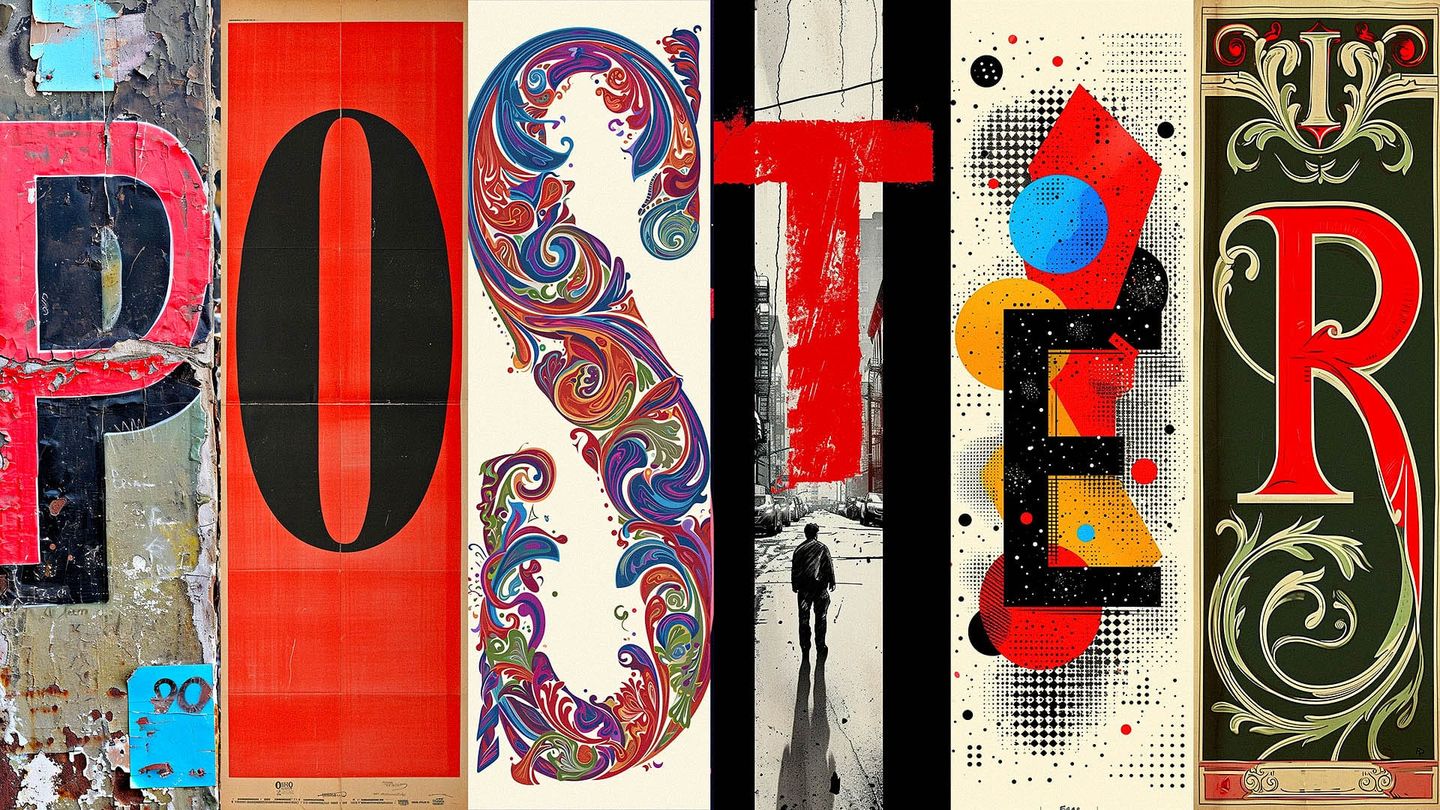
From ancient times to the present days, posters have been an integral part of our activities—promoting goods and services, announcing events, rallying people, and spreading vital public information. And like many other essential facets of human communication, this initially practical tool swiftly transformed into a medium for artistic self-expression.
In this episode of Midlibrary’s In Focus, we will use Midjourney to venture back in time to explore the origins of posters, and trace their evolution into a widespread means of mass communication and a distinct genre of art.
A Brief History of Poster Art
The history of poster art vividly reflects technological advancements, societal shifts, and, of course, artistic innovation. Originating in ancient times as merchants' advertisements etched on stone plaques, posters gained momentum with the invention of Gutenberg's printing press in the mid-15th century, primarily serving public notices and commercial purposes.
The next significant leap in poster art occurred with Alois Senefelder’s refinement of lithography in 1796. Yet, it was Jules Chéret’s “3 stone lithographic process” in the late 19th century that truly heralded the era of the modern poster, characterized by their vibrant colors and dynamic compositions.
The end of the 19th and beginning of the 20th centuries witnessed the rise of Art Nouveau in poster design, epitomized by the works of Alphonse Mucha and Henri de Toulouse-Lautrec, who elevated the poster to a form of artistic expression that captured the zeitgeist of the era.
The turmoil of World War I transformed posters into pivotal instruments of propaganda, a trend that extended into the interwar years and beyond. This period also introduced Art Deco and Modernism to poster design, showcasing geometric forms and streamlined aesthetics. Influential movements like Constructivism, De Stijl, and Bauhaus redefined poster art with their emphasis on bold graphics and clarity.
The post-World War II era was dominated by Mid-Century Modernism and the Swiss Style, reflecting advancements in photo offset printing. The 1960s saw a revival of Art Nouveau elements in psychedelic posters, echoing the countercultural zeitgeist.
The 1970s and 80s were marked by the punk movement and the emergence of underground zine culture, introducing a DIY ethos to poster art with raw, edgy designs, unconventional aesthetics, collage techniques, and bold typography. The vibrant music scene of these decades, especially through rock and punk, propelled the concert poster to iconic status, merging artistic expression with promotional art, political statements, and cultural commentary.
The advent of digital technology in the late 20th and early 21st centuries signaled another pivotal shift in poster design, ignited by desktop publishing and graphic design software that democratized the creation process. These tools, along with the development of high-tech consumer electronics like scanners, printers, and digital cameras, enabled both professional designers and amateur artists to experiment with a previously inaccessible palette of expressive tools, colors, fonts, images, and complex multi-layered compositions.
At this juncture, we enter the era of AI, which has absorbed the experiences and experiments of past artists, enabling us to stand on the shoulders of giants as we create our posters. Now, let's adopt the Midjourney lens to delve into its understanding of various epochs, names, and genres of poster art, and explore how we can use these insights to possibly contribute to the next phase in the evolution of poster art.
Poster Art with Midjourney
Techniques
First, let's explore the printing techniques foundational to poster creation, delving into how Midjourney interprets these methods when asked to create a poster.
Artistic Movements, Genres and Epochs
Next, here are some of the most important artistic movements and genres that have influenced poster art, as well as thematic posters and various time periods.
Poster Artists + Designers
Moving on, lets spotlight some of the masterminds—the artists and designers—behind iconic posters, as seen through Midjourney's eyes.
Complex Poster Prompts
Finally, let’s examine how Midjourney deals with the challenges of intricate designs and multifaceted narratives in posters (including the addition of text), and which prompts can work well for poster-making art.
In Conclusion
In summary, a poster transcends its basic definition when it adorns a wall not just as a piece of information but as an artwork. Midjourney is an invaluable companion in this artistic journey that offers endless inspiration and serves as a great creativity catalyst for your own unique poster design.
With its assistance in conceptualizing and visualizing ideas, perhaps all that's left for one to do is incorporate text to transform pure imagination into tangible art for your walls.
With its assistance in conceptualizing and visualizing ideas, perhaps all that's left for one to do is incorporate text to transform pure imagination into tangible art for your walls.
Until next time!
— Andrei & Maria
About the authors

I am a visual artist with 17 years of experience in portrait photography, film, mask design, and education. As Midjourney AI and its analogs are revolutionizing the world of art and our creativity itself, I am overwhelmingly excited to explore the limits of these fantastic new tools and share my findings with the community.

I love nature, nude photos, punk hardcore and cats. Bugs collector, art creator